GM Announces Vehicle-to-Grid Technology and Energy Storage Solutions to Address AI Data Center Power Demands

General Motors announced a sweeping energy strategy at its San Francisco 'GM Empower' event, including a partnership with startup Peak Energy to develop sodium-ion batteries for grid-scale storage, a vehicle-to-grid (V2G) firmware rollout for its 250,000 bidirectional-capable EVs, and a new unified charging app called Energy Pass. The announcements come as AI data centers drive historic electricity demand growth, and as GM seeks to monetize battery R&D following a pullback in EV sales targets. The moves position GM as a distributed energy provider competing directly with Ford's newly formed Ford Energy unit, while also raising regulatory and consumer adoption hurdles that could slow the vision's realization.
At its 'GM Empower' event in San Francisco on Tuesday, General Motors unveiled a multi-pronged energy strategy centered on three pillars: vehicle-to-grid technology, new battery chemistries for stationary storage, and a unified charging software platform. GM announced it will push a firmware update to existing vehicle-to-home customers, enabling their bidirectional-capable Chevy, Cadillac, and GMC EVs to send power back to the grid; the company says its 250,000 such vehicles on U.S. roads could theoretically power 120,000 homes for up to a week. For grid-scale stationary storage, GM is partnering with California-based startup Peak Energy to develop sodium-ion (specifically sodium pyrophosphate, or NFPP) battery cells, which GM says will operate across a wider temperature range (-40°C to 60°C), require no active cooling, target 10,000–20,000 charge cycles, and be at least 20% cheaper to operate than current lithium iron phosphate systems; trial production at GM's Battery Cell Development Center is expected in 2028. GM is also expanding its partnership with Redwood Materials, deploying a 7.2 MWh second-life EV battery system at a Michigan plant projected to save $3 million over its lifetime, and will sell LFP cells to LG Energy Solution for near-term energy storage needs. The new Energy Pass app will allow GM EV owners to find, start, and pay for charging across Tesla Superchargers, Electrify America, IONNA, and eventually EVgo and ChargePoint—covering roughly 70% of U.S. DC fast chargers—through a single interface. GM is piloting V2G with PG&E in Northern California, targeting 52,000 participating vehicles by 2030, and with DTE Energy in Michigan using 30 employee homes, while GM Energy VP Wade Sheffer issued an open letter urging regulators and utilities to streamline interconnection rules and rate structures to make V2G commercially viable.
What's missing
No source provides independent verification of GM's claimed 20% cost savings for sodium-ion systems versus LFP, nor details on the size of GM's undisclosed investment in Peak Energy. Regulatory timelines for V2G rate structures and interconnection approvals at the state level, which GM itself acknowledges are critical bottlenecks, are not quantified by any source.
How coverage differed
Tech-focused outlets like TechCrunch and Ars Technica emphasized the sodium-ion battery chemistry and its engineering details, while The Verge and Business Insider foregrounded the V2G consumer angle and EV owners' potential financial returns. Fortune framed GM's announcements most broadly as a strategic pivot toward becoming a 'distributed utility,' explicitly comparing GM's approach to Ford's contrasting industrial battery-supply strategy, whereas most other outlets treated the Ford comparison as secondary or omitted it entirely.
What different sources said
- The Straits TimesCenter
‘Battery on wheels’: Sweden powers homes with EVs
- The VergeLeft
GM thinks EVs can help offset AI’s energy suck with vehicle-to-grid tech
- TechCrunchCenter
Everyone wants a piece of Tesla’s battery business
- Yahoo FinanceCenter
America’s grid is reeling. General Motors offers itself as a distributed utility in disguise
- The RegisterCenter
GM gets datacenter fever, decides to build grid-scale sodium-ion batteries
- ReutersCenter
Exclusive: GM may ditch LFP batteries for future EVs
- Business InsiderLeft
GM wants your EV to help power the grid
- FortuneCenter
America’s grid is reeling. General Motors offers itself as a distributed utility in disguise
- ForbesCenter
GM Doubles Down On Energy Business To Serve Data Center Electricity Demand
- NYT PoliticsLeft
G.M. Plans to Develop Energy Storage Batteries as E.V. Sales Flag
- Ars TechnicaCenter
GM Energy introduces V2G support and new energy storage battery chemistry
- Autoguide.comCenter
GM’s New Pitch: EVs Aren't the Grid's Problem, They’re the Answer
- InsideEVsCenter
China Loves This Cheap Battery Tech. Here's Why General Motors Might Not Stick With It
- Yahoo FinanceCenter
GM Diversifies Its Battery Technology
Related
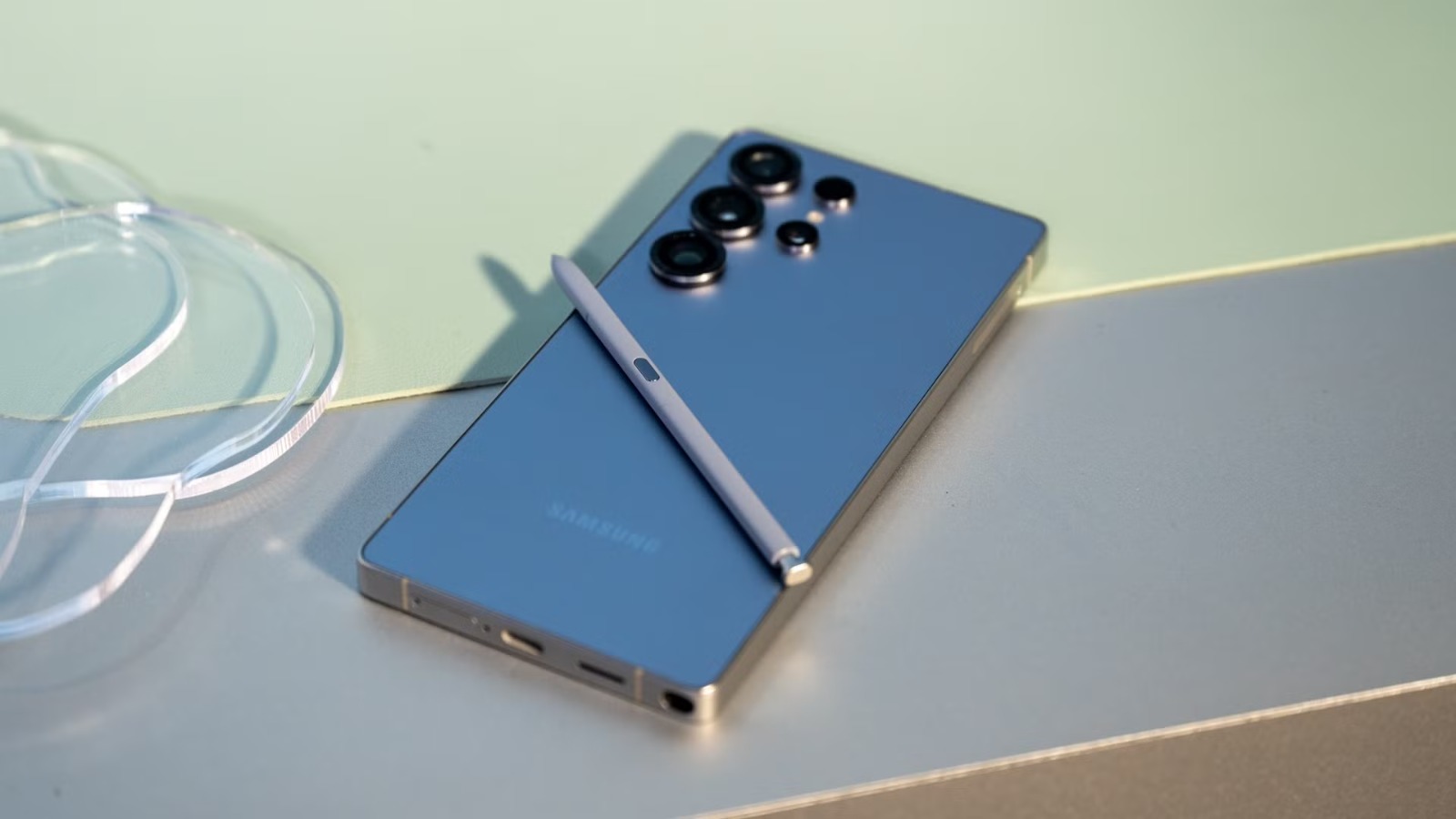
Samsung Galaxy S25 and S25 FE See Significant Price Cuts
Samsung's Galaxy S25 and Galaxy S25 FE smartphones are currently available at notably reduced prices, with the S25 FE dropping $201 (33%) to $449 on Woot for a limited time. The price reductions come amid a competitive smartphone market and ahead of anticipated future Samsung releases. The discounts make previously premium-priced devices more accessible to budget-conscious consumers.

Anthropic Disables Fable 5 and Mythos 5 AI Models Globally After US Government Export Control Order
Anthropic has suspended all public access to its two most advanced AI models, Fable 5 and Mythos 5, after the US Commerce Department issued an export control directive ordering the company to block foreign nationals from accessing them on national security grounds. The order came just three days after Fable 5's public launch and reportedly stems from government concerns about a potential jailbreak that could enable the models to assist with cyberattacks, though Anthropic says it received only verbal evidence of a narrow, non-universal vulnerability. The shutdown affects all customers globally — including enterprise users and Anthropic employees — and marks a significant escalation of US efforts to restrict foreign access to advanced AI models themselves, rather than just the chips that power them.

Xbox Free Play Days Offers Three Games Free to Play June 11–14
Microsoft's Xbox Free Play Days program is offering Hell Let Loose, State of Decay 2: Juggernaut Edition, and Blasphemous 2 at no cost from June 11 to June 14. Hell Let Loose requires an Xbox Game Pass Ultimate, Premium, or Essential membership, while State of Decay 2 and Blasphemous 2 (via a five-hour timed trial) are accessible to all Xbox console owners. Players who wish to keep any of the games can purchase them at a limited-time discount and retain any achievements earned during the free period.