From Medical Error to Chess Prodigy: How Subhi Gupta Became India's Top-Ranked Girl Player

Subhi Gupta, a 16-year-old chess player from Ghaziabad, recently became India's No. 1 ranked girl and World No. 4 in the under-20 category after gaining 184 rating points in German tournaments. Her rise has been marked by significant obstacles, including a medical store error that dispensed eyedrops 100 times stronger than prescribed, severely impairing her vision during her first independent international tournament in Uzbekistan last year. Her achievement is notable as it represents a rare breakthrough for northern India in a chess landscape traditionally dominated by southern players.
Subhi Gupta, a 16-year-old chess prodigy from Ghaziabad, Uttar Pradesh, has achieved the ranking of India's No. 1 girl player and World No. 4 among female players aged 20 and younger on the FIDE rating list. Her rapid ascent gained momentum after competing in two strong tournaments in Germany last month, where she accumulated 184 rating points and climbed 37 places in the global rankings. Her journey has been unconventional and challenging: introduced to chess at age eight through a school hobby club, she showed early promise by finishing 10th in the Under-9 National Championship with minimal training. During the COVID-19 lockdown, she intensified her focus on chess, dominating online circuits and winning multiple national championships while training under Delhi-based coach Prasenjit Dutta. Her path has included significant setbacks, most notably when a medical store dispensed eyedrops at 100 times the prescribed strength before her first independent international tournament in Uzbekistan in March 2024, leaving her vision severely impaired for a week. Despite these obstacles, she has broken through India's traditional southern chess dominance by bringing national trophies to Ghaziabad.
What's missing
The article does not provide information about Subhi's current rating points, her specific tournament results in Germany, or details about her performance in the Uzbekistan tournament despite the eyedrop incident. Additionally, there is no mention of how she overcame the depression referenced in the headline, or what specific support systems helped her recover from this setback.
What different sources said
- Times of IndiaCenter
Battling medical store's eyedrop blunder, depression: How UP's Subhi became India Girls' No. 1
- Times of IndiaCenter
Battling medical store's eyedrop blunder, depression: How UP's Shubhi became India Girls' No. 1
Related

Jackson Dean Contributes Tribute Song to Gregg Allman Documentary
Country star Jackson Dean has contributed a song titled "My Cross to Bear" to the documentary "Gregg Allman: The Music of My Soul," which premiered in New York City on June 9, 2026. The film celebrates the life and legacy of the Allman Brothers Band founder and is being distributed by Subtext, an independent film production company. The documentary will expand to theaters nationwide on June 17 after premiering in Macon, Georgia and select cities.

MGK Describes Severe Health Issues During Large Blackout Tattoo Project
Musician MGK revealed in a Billboard Canada interview that he experienced significant health complications while getting a large blackout tattoo on his upper body, including swollen lymph nodes, yellowing skin, insomnia, and reduced mobility. The tattoo, created by artist ROXX and originally planned as a two-year project, was completed in approximately two months due to the severity of his symptoms. MGK stated he emerged from the experience inspired despite the physical toll.
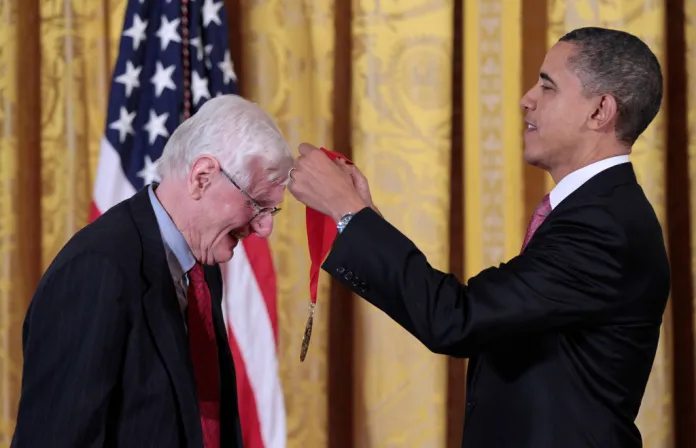
Historian Gordon Wood, Pioneer of Revolutionary Era Scholarship, Dies at 92
Gordon Wood, a prominent historian who revolutionized the study of the American Revolution and Founding Fathers, has died at age 92, just weeks before the 250th anniversary of the Declaration of Independence. Wood and his mentor Bernard Bailyn pioneered a scholarly approach that carefully examined primary sources like pamphlets and debates rather than imposing ideological frameworks onto history. His work represents the end of what scholars call a golden age in American Revolutionary historiography that began in the postwar decades.