First Human Receives Gene Therapy Designed to Reverse Cellular Aging
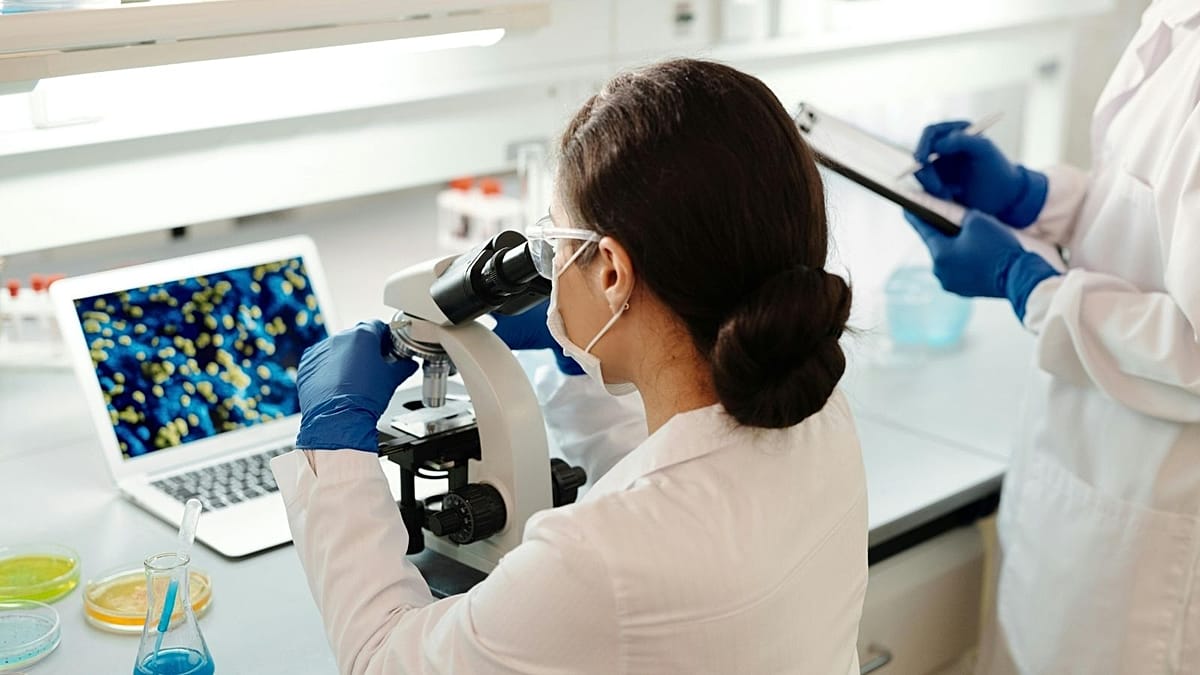
A Boston-based biotech company, Life Biosciences, has administered ER-100, a gene therapy using three proteins (Oct4, Sox2, Klf4) to reverse cellular aging, to a human patient for the first time. The therapy targets optic neuropathies by resetting the epigenetic code that controls gene expression, an approach based on Nobel Prize-winning research. The Phase 1 trial represents a milestone in aging biology, though it remains early-stage and focused on safety assessment in patients with specific eye diseases.
Life Biosciences announced that a human patient has received ER-100 (AAV2-OSK), a gene therapy designed to reverse cellular aging through epigenetic reprogramming. The treatment uses three proteins—Oct4, Sox2, and Klf4 (collectively known as OSK factors)—to reset cells to a younger state by restoring the epigenetic code that controls which genes are active or inactive. Unlike DNA sequence changes, epigenetic alterations accumulate over time due to aging, disease, lifestyle factors, and injury, potentially leading to cancer and neurological disorders. The therapy has entered Phase 1 clinical trials, initially targeting patients with open-angle glaucoma and non-arteritic anterior ischemic optic neuropathy (NAION), two serious eye conditions causing vision loss. The approach builds on the 2012 Nobel Prize-winning discovery by Gurdon and Yamanaka that demonstrated how to reprogram ordinary cells into stem cells. Life Biosciences plans to expand the therapy to other organs and conditions, while other companies like Retro Biosciences are also pursuing similar aging-reversal strategies.
Limitations & open questions
The article does not specify the patient's baseline characteristics (age, disease severity), the trial's enrollment size or timeline, or what specific endpoints will be measured to assess efficacy beyond safety in Phase 1. Additionally, potential risks or side effects of epigenetic reprogramming in humans are not discussed, nor are the regulatory pathways or timelines for potential approval.
What different sources said
- EuronewsCenter
Is it possible to rejuvenate damaged human cells? US biotech firm tests new gene therapy
Related
Profilin-1 Deficiency Activates Immune Response Against Breast Cancer in Preclinical Study
Researchers found that removing the Profilin-1 protein from breast cancer cells triggers DNA damage and activates an immune pathway called STING, which recruits cancer-fighting T cells and causes tumor regression in mice. The study used CRISPR gene-editing technology to deplete Profilin-1 and observed that the resulting genomic instability paradoxically strengthens anti-tumor immunity. The findings suggest targeting Profilin-1 could be a new strategy to enhance immunotherapy effectiveness in breast cancer.
Computational Study Explores How Magnetic Fields May Affect Tomato Plant Ion Channels
Researchers used molecular dynamics simulations to investigate how static magnetic fields affect the CNGC6 ion channel in tomato plants, finding that magnetic fields may alter the channel's structure in specific ways. The study was motivated by observations that magnetic treatment of tomato seeds appears to speed germination and improve plant development, though the underlying cellular mechanisms remain unclear. The findings provide a computational foundation for future experimental work, though the authors emphasize this is a preliminary exploratory study requiring validation.
New Algorithm Simplifies Evolutionary Network Reconstruction for Hybridized Species
Researchers developed NetCS, a fast algorithm for reconstructing evolutionary networks in hybridized species that avoids expensive computational bottlenecks. The method works well when given accurate intermediate data but reveals that the real challenge in network inference lies in an earlier reconstruction step. This finding could enable phylogenetic analyses of larger datasets while identifying where future improvements are needed.