Federal judges hold hearings on Trump administration's $1.8 billion 'Anti-Weaponization Fund' despite DOJ claims it's abandoned
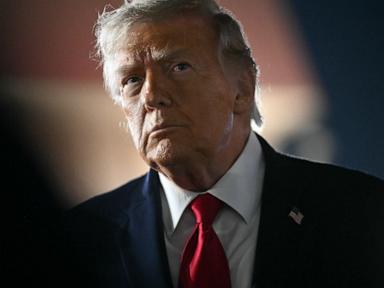
A federal judge in Virginia on Friday indefinitely extended a block on the Trump administration's $1.776 billion 'Anti-Weaponization Fund,' giving the Justice Department one week to submit sworn declarations from Acting Attorney General Todd Blanche and Treasury Secretary Scott Bessent confirming the fund will not proceed. The fund was created in May as part of a settlement of Trump's $10 billion lawsuit against the IRS over the leak of his tax returns, and drew bipartisan backlash over the possibility it could compensate Jan. 6 Capitol rioters with taxpayer money. The ruling underscores deepening judicial skepticism about the administration's credibility, as Trump has continued to publicly express support for the fund even as DOJ officials claim it is dead.
U.S. District Judge Leonie Brinkema of the Eastern District of Virginia issued a preliminary injunction on Friday indefinitely blocking the Trump administration's $1.776 billion 'Anti-Weaponization Fund,' extending a temporary halt she had put in place the previous week. Brinkema said Acting Attorney General Todd Blanche's congressional testimony that the fund was 'not moving forward' was insufficient, citing President Trump's own public statements expressing continued support for the concept as evidence the fund could be revived. She gave the administration one week to file sworn declarations from Blanche and Treasury Secretary Scott Bessent formally stating the fund is dead, indicating she may reconsider her order if such declarations are submitted. The ruling came two days after a separate federal judge in Washington, D.C., Richard Leon, declined to issue a temporary restraining order against the fund, accepting the DOJ's mootness argument for now but warning the government not to 'play possum with this court.' Both judges pressed DOJ attorney Andrew Block on why Blanche had not formally rescinded his May 18 order establishing the fund, a question Block said he could not answer. Adding to the uncertainty, reporting by The Atlantic, citing eight anonymous sources including current and former DOJ officials, indicated that administration officials have been quietly assuring allies that some form of payout remains on track, while Trump allies and legal experts are also exploring the Federal Tort Claims Act as an alternative mechanism for compensating supporters. A separate federal judge in Florida is also scrutinizing the underlying IRS settlement that created the fund, after a group of 35 former federal judges alleged the case was a product of collusion and a fraud on the court.
What's missing
The scope of the IRS audit immunity provision for Trump, his family, and businesses — a separate element of the underlying settlement that remains in place — has received limited coverage relative to the fund itself.
How coverage differed
Right-leaning outlets such as Fox News and Breitbart emphasized the judicial appointees' partisan affiliations — describing Brinkema as a 'Clinton judge' and Leon as a 'Bush appointee' — and framed the fund sympathetically as compensation for citizens targeted by the Biden administration. Center and left-leaning outlets focused more heavily on the administration's credibility gap, the anonymous sourcing suggesting the fund is not truly dead, and the constitutional concerns raised by the judges.
What different sources said
- PoliticoLeft
Judge declines to block ‘Anti-Weaponization Fund’ officials say is halted
- ReutersCenter
US judge denies request to temporarily halt Trump's abandoned 'weaponization' fund
- CBS NewsCenter
Judge declines to halt "anti-weaponization fund" but warns DOJ not to "play possum"
- PBS NewsHourLeft
'The Department of Revenge' explores Trump's use of DOJ to settle political scores
- The AtlanticLeft
Trump’s ‘Anti-Weaponization’ Payouts May Not Be Dead After All
- Washington ExaminerRight
Judge refuses to block anti-weaponization fund but promises to act if the administration restarts plans
- ABC NewsCenter
'Anti-Weaponization Fund' still being challenged despite DOJ's vows to kill it
- Yahoo FinanceCenter
Trump’s DOJ ‘quietly assuring allies’ to expect slush fund payouts
- The IndependentLeft
Trump’s DOJ ‘quietly assuring allies’ to expect slush fund payouts
- ForbesCenter
Trump Administration Insists Anti-Weaponization Fund Is Dead—But Reportedly Still Working To Pay Allies
- The HillCenter
Judge rejects bid to halt 'anti-weaponization' fund, warns DOJ not to 'play possum'
- Washington TimesRight
Judge rejects watchdog's bid to block Trump administration's $1.8B 'anti-weaponization' fund
- AP NewsCenter
Judge rejects watchdog's bid to block Trump administration's $1.8B 'anti-weaponization' fund
Federal judge warns Justice Department not to revive payout fund
- NBC PoliticsLeft
Judge warns DOJ not to ‘play possum’ with ‘anti-weaponization’ fund it says is dead
- NYT USLeft
Blocking Trump’s Fund, Judge Presses for Guarantee It Won’t Move Forward
- BBC Top StoriesCenter
Trump 'anti-weaponisation' fund indefinitely blocked as judge wants guarantee it's abandoned
- Channel NewsAsiaCenter
US judge indefinitely blocks Trump's 'anti-weaponisation' fund
- BreitbartFar Right
Federal Judge Extends Block on Trump Administration's 'Anti-Weaponization Fund' for Citizens Biden Targeted
- AxiosCenter
Swear Trump's weaponization fund is dead to kill lawsuit, judge says
- The Straits TimesCenter
Trump's allies have another way to pay 'weaponization' victims
- NDTVCenter
Trump Allies Float Alternate Ways To Pay 'Weaponisation' Victims
- Fox NewsRight
Clinton judge warns Trump DOJ not to 'play possum' on $1.2B Anti-Weaponization Fund
- UPICenter
Judge extends block on Trump administration 'anti-weaponization' fund
- CNBCCenter
Judge grants longer-term block of 'anti-weaponization' fund, wants guarantee it’s dead
Judge extends block on Trump’s $1.8bn ‘anti-weaponization’ fund
- NewsweekCenter
DOJ Weaponization Fund Update: Trump Admin Given One Week Deadline by Judge
- Roll CallCenter
Court extends block on ‘anti-weaponization’ fund
- Al JazeeraLeft
US judge extends block on Trump’s $1.8bn ‘anti-weaponisation’ fund
Related

CIS Study: Non-Citizen Households Use Welfare at Higher Rates Than U.S.-Born Households in Nearly Every State
A new analysis by the Center for Immigration Studies found that 47% of non-citizen-headed households used at least one means-tested welfare program, compared to 28% of U.S.-born-headed households. The study drew on five years of Census Bureau data and found the gap persisted across nearly every state, with the largest disparities in New York, Massachusetts, and California. The findings reignite a long-running debate over immigration and public benefit usage, though the methodology has been contested by other researchers.

Pilot Killed in Small Plane Crash Near Twin Oaks Airpark in Washington County, Oregon
A small two-seater experimental plane crashed into a grassy field near Twin Oaks Airpark in Hillsboro, Oregon on Friday afternoon, killing its sole occupant. The crash occurred during takeoff and sparked a grass fire that spread to a nearby field before firefighters contained it. The NTSB and FAA are investigating the cause, and flights at the airpark were canceled for the remainder of the day.
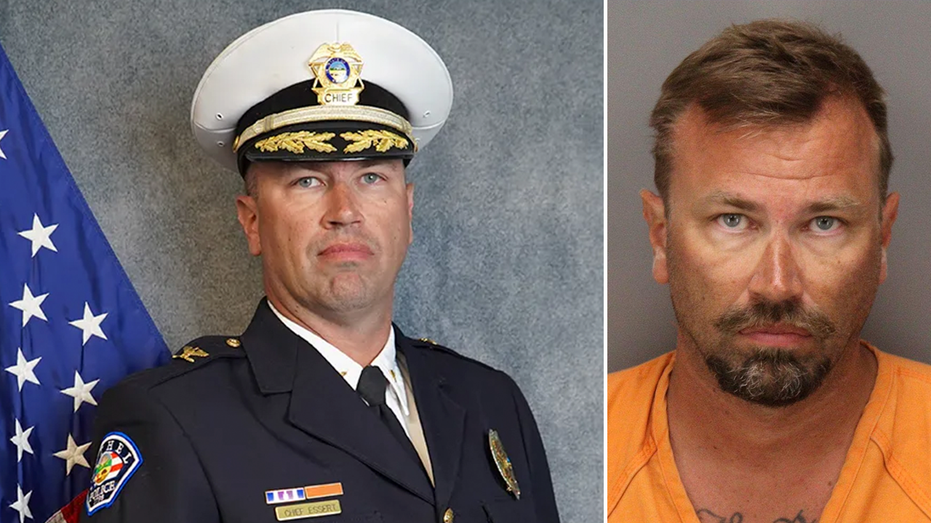
Ohio Police Chief Arrested in Florida on 70-Count Child Sex Indictment
Bethel Police Chief Chad Essert, 44, was arrested Tuesday night in Seminole, Florida, following a Clermont County grand jury indictment on 56 counts of sexual battery and 14 counts of unlawful sexual conduct with a minor. The alleged offenses occurred between 2005 and 2010, when Essert was an instructor with the Young Marines program and a teacher at Scarlet Oaks Career Campus in Sharonville, Ohio. If convicted on all counts, Essert faces a maximum of 280 years in prison, and authorities are urging any additional potential victims to come forward.