Deep-sea giant isopods use bacterial gene to survive years without food
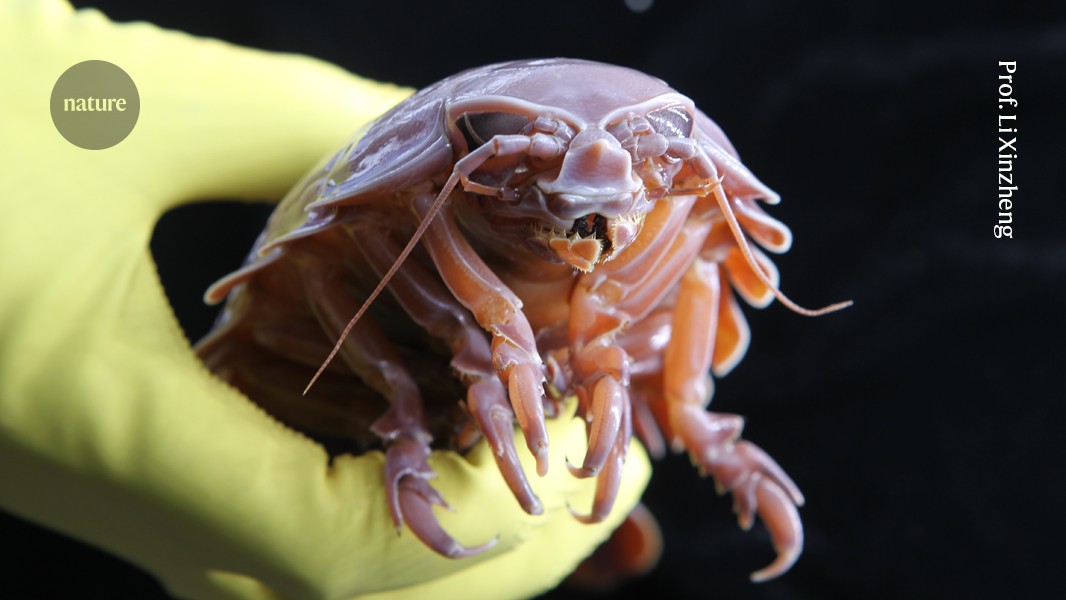
Researchers have discovered that bathynomid isopods, giant deep-sea crustaceans reaching 50 centimeters in length, possess a bacterial gene that enables them to regulate their metabolism and survive for years without eating. This gene appears to have been acquired through horizontal gene transfer from bacteria, allowing these organisms to thrive in the nutrient-poor deep ocean environment. The finding provides insight into how organisms adapt to extreme conditions and may have implications for understanding metabolic regulation across species.
Scientists studying bathynomid isopods have identified a bacterial gene that these giant deep-sea crustaceans use to regulate their metabolism, enabling them to endure extended periods without food—potentially years at a time. The gene appears to have been horizontally transferred from bacteria to these organisms, representing an unusual example of cross-kingdom genetic acquisition. These supergiant isopods can reach lengths of 50 centimeters and inhabit the cold, food-scarce depths of the ocean where such metabolic adaptations would provide significant survival advantages. The discovery highlights how organisms living in extreme environments have evolved or acquired specialized genetic tools to cope with their harsh conditions. This research contributes to broader understanding of how metabolism is regulated and how genetic material can be shared across different domains of life.
Limitations & open questions
The specific bacterial source of the gene, the mechanism by which horizontal gene transfer occurred, the timeline of this genetic acquisition, and details of the research methodology and findings are not provided in this news highlight.
What different sources said
- Nature NewsCenter
Giant crustacean of the deep sea steals a trick from bacteria
Related
Study reveals IDH1 enzyme's role in cardiac metabolic adaptation during cancer-related stress
Researchers discovered that isocitrate dehydrogenase 1 (IDH1) helps the heart adapt to metabolic stress caused by cancer-related mutations through a previously unknown reductive metabolic pathway. The study used stable isotope tracing and genetic knockout models in rat and mouse heart tissue to show that when mitochondrial metabolism is impaired, IDH1 redirects carbon flux toward glutamine-derived citrate formation. This finding expands understanding of how cardiac metabolism responds to oncometabolic stress and may have implications for managing cardiovascular complications in cancer patients.
AI Framework Reveals How β-Arrestin 1 Protein Changes Shape During Activation
Researchers used a transformer-based artificial intelligence model to analyze how the β-arrestin 1 protein's tail region reorganizes when activated by cell surface receptors. The study examined molecular dynamics simulations comparing the protein in resting and active states, uncovering previously unknown conformational changes. This work could improve understanding of how cells regulate signaling pathways involved in numerous physiological and disease processes.
Study Links Pancreatic Cancer Tissue Stiffness to Tumor Progression and Patient Survival
Researchers combined imaging scans and laboratory tissue analysis to show that pancreatic cancer tumors with greater stiffness—driven by dense collagen buildup—correlate with worse patient survival outcomes. The study of nine patients found that magnetic resonance elastography, a non-invasive imaging technique, can detect mechanical properties that reflect underlying tumor biology. These findings suggest that measuring tissue stiffness through imaging could help doctors better characterize pancreatic cancer and guide treatment decisions.