Cruz and Wyden Introduce Bipartisan JAWBONE Act to Combat Government Censorship
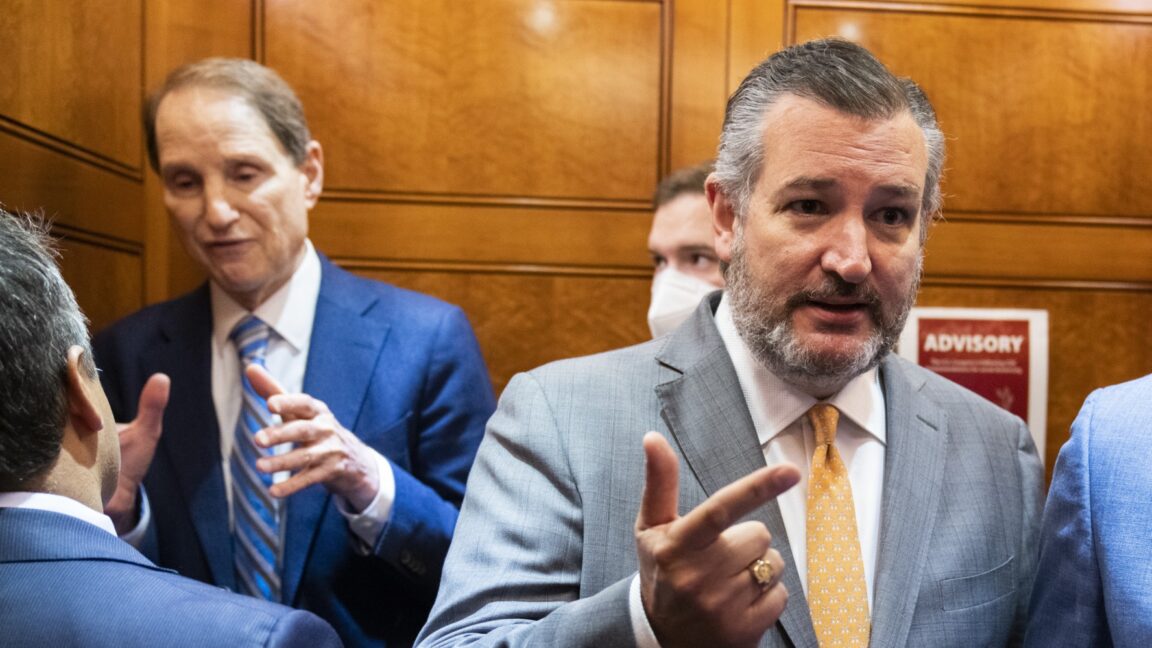
Senators Ted Cruz (R-TX) and Ron Wyden (D-OR) introduced the JAWBONE Act, a bipartisan bill that would create a legal cause of action against government agencies or employees who pressure social media platforms, AI systems, or broadcasters to censor speech, regardless of whether the pressure succeeds. The bill responds to concerns about 'jawboning' under both the Biden and Trump administrations, including pressure on tech companies over COVID-19 content and threats against TV broadcasters over late-night programming. It would allow plaintiffs to seek compensatory damages and attorney fees, require public disclosure of government communications with platforms, and fill gaps in existing law that have made such violations difficult to challenge in court.
Introduced Thursday, the JAWBONE Act — standing for Justice Against Weaponized Bureaucratic Overreach to Networked Expression — would prohibit federal agencies and employees from coercing social media companies, AI providers, and broadcasters into making content decisions, and would allow affected individuals, platforms, and states to sue for monetary damages and attorney fees, though not punitive damages. Under current law, plaintiffs face significant obstacles: they must prove government pressure actually caused content changes, can only seek injunctions rather than damages, and often cannot even discover that covert government pressure occurred. The bill addresses these gaps by allowing suits over attempted jawboning, requiring agencies to submit records of their communications with platforms to a public portal administered by the White House Office of Science and Technology Policy, and expressly extending liability to federal officials — who are not currently covered by 42 USC 1983. Exceptions are carved out for lawful investigations, warrant-authorized actions, and agencies' official use of platforms, with the burden on the government to prove an exception applies. The bill has drawn endorsements from ten civil liberties organizations spanning the political spectrum, including the ACLU, FIRE, the Knight First Amendment Institute, and Americans for Tax Reform, and builds on earlier, less comprehensive anti-jawboning bills introduced by Senators Eric Schmitt and Rand Paul. Cruz and Wyden each cited different administrations as the most egregious offenders — Cruz pointing to Biden-era CISA pressure on tech companies, Wyden highlighting Trump-era threats against broadcasters and app stores — underscoring the bill's framing as a remedy for a persistent, cross-partisan problem.
What's missing
The bill has not yet received a Senate number, and it is unclear whether it has any House companion legislation or a realistic path to a floor vote given the current legislative calendar.
How coverage differed
Reason framed the bill with notable emphasis on criticizing both the Biden administration's past conduct and Trump's ongoing jawboning, using it as an opportunity to highlight ideological inconsistency on the right. Engadget highlighted the partisan tension between the two senators' statements — each blaming the opposing party's administration — as a notable subplot, while Roll Call and Ars Technica focused more neutrally on the bill's legal mechanics and legislative history.
What different sources said
- Roll CallCenter
Bipartisan bill targets government censorship threats
- ReasonRight
Two Senators Offer a Bipartisan Solution to Censorship by Proxy
- Ars TechnicaCenter
Ted Cruz and Ron Wyden try to fight censorship with bipartisan JAWBONE Act
- EngadgetCenter
Senators introduce bipartisan bill to fight government censorship
Related

Workers Begin Removing Trump's Name from Kennedy Center Facade After Court-Ordered Deadline
Workers started stripping President Trump's name from the exterior of the Kennedy Center in Washington overnight Friday into Saturday, hours past a court-ordered deadline of 11:59 p.m. Friday. The delay was attributed to nearby thunderstorms, and the Kennedy Center's board sought a 12-hour extension, which U.S. District Judge Christopher Cooper had already denied after rejecting the board's last-minute attempt to halt the order. The removal marks a significant legal rebuke of the Trump administration's effort to rename the historic performing arts venue, with a court ruling that only Congress has the authority to change the Kennedy Center's name.
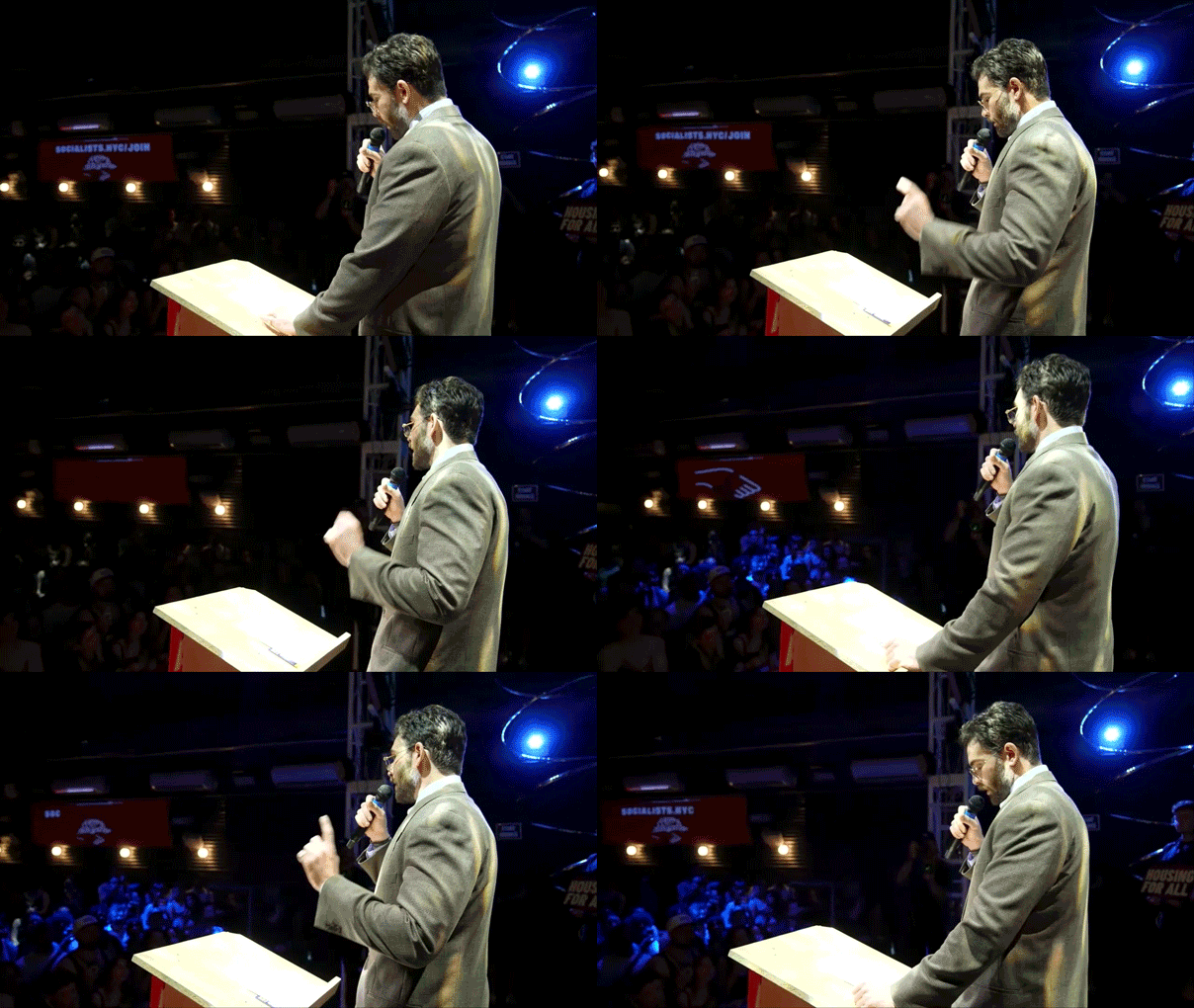
Hasan Piker Campaigns for DSA-Backed NYC Candidates, Sparking Debate Over Democratic Party Direction
Twitch streamer Hasan Piker rallied in Brooklyn for two Democratic Socialist of America-endorsed congressional candidates ahead of New York's June 23 primary, declaring the country is 'closer than ever' to socialism. The appearances come amid a broader debate within the Democratic Party over whether to embrace or distance itself from Piker, whose pro-Palestinian views and provocative statements have made him a polarizing figure. The controversy highlights a growing tension between the party's centrist establishment and its increasingly left-leaning base, particularly on foreign policy.

Fire Rescue Victoria Has Missed Emergency Response Targets Every Year Since 2020, With Outer Suburbs Worst Affected
Fire Rescue Victoria (FRV) has failed to meet its target of responding to 90 per cent of structural fires within seven minutes and 42 seconds in every year since its formation in 2020, with outer suburban areas recording the worst performance. The shortfall has come into sharp focus following the death of three-year-old Jordan Dashwood in a Werribee house fire this month, where the nearest FRV truck was committed to another incident and the first responders arrived well outside the benchmark time. The findings raise serious questions about whether the 2020 fire services restructure has been adequately resourced to protect Melbourne's rapidly growing outer suburbs.