Congress Candidate Meenakshi Natarajan's Rajya Sabha Nomination Rejected
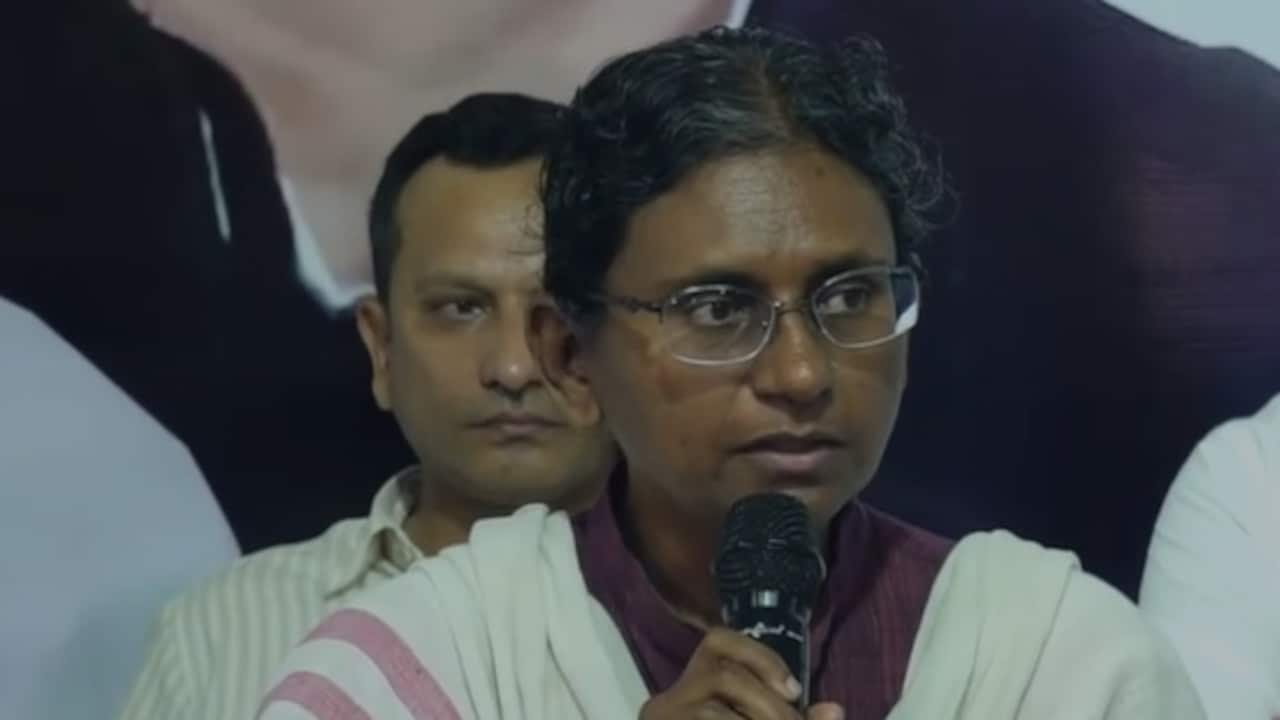
The BJP swept all three Rajya Sabha seats from Madhya Pradesh unopposed after the Returning Officer rejected Congress candidate Meenakshi Natarajan's nomination on grounds that she concealed a pending court case in Telangana from her election affidavit. The rejection, triggered by an objection filed by BJP's third candidate Mahesh Kewat, came amid a chaotic day that also saw Congress MLAs being flown to Karnataka to prevent cross-voting. Congress has challenged the decision in the Supreme Court, which agreed to hear the case but declined to halt the electoral process, allowing BJP candidates Tarun Chugh, Rajneesh Agrawal, and Kewat to be declared elected after the withdrawal deadline passed on Thursday.
On Tuesday, Returning Officer Arvind Sharma rejected the Rajya Sabha nomination of Congress candidate Meenakshi Natarajan from Madhya Pradesh, upholding an objection filed by BJP candidate Mahesh Kewat and state party general secretary Rahul Kothari, who alleged she had concealed details of a case pending before a Hyderabad court in her affidavit. The case pertains to a private complaint filed in Telangana in 2022 under multiple BNS sections, including one related to a rape case against a Congress leader. Congress maintained that no criminal case had been registered and that Natarajan had only received a show-cause notice, which they argued did not require disclosure under Election Commission guidelines. The rejection left Congress unable to field a replacement candidate, as the nomination deadline had already passed, and by Thursday all three BJP candidates were declared elected unopposed after the withdrawal deadline expired. Natarajan moved the Supreme Court challenging the Returning Officer's decision as illegal and arbitrary, but a bench of Justices Prashant Kumar Mishra and Atul S. Chandurkar declined to stay the electoral process, citing the 2000 precedent in Election Commission of India vs. Ashok Kumar, while listing the matter for a full hearing. Congress leaders including Rahul Gandhi, K.C. Venugopal, Kamal Nath, and Bhupesh Baghel condemned the outcome as a subversion of democracy, while the BJP and Madhya Pradesh Chief Minister Mohan Yadav defended the Returning Officer's decision as a legitimate application of disclosure rules.
What's missing
The Supreme Court's eventual ruling on Natarajan's petition, scheduled for June 12, is not covered in any of the sources provided.
How coverage differed
All outlets reported the core facts consistently, but framing differed in emphasis: NDTV and News18 foregrounded the BJP's electoral sweep and Congress's political setbacks, while The Hindu provided more granular detail on the legal nature of the Telangana case and Congress's constitutional arguments, lending slightly more weight to the opposition's position. Hindustan Times was notable for including the Supreme Court's specific legal reasoning in declining to stay the process.
What different sources said
- The HinduCenter
After ‘vote chori’ and ‘sarkar chori’ charges, Rahul Gandhi accuses BJP of ‘seat chori’ in Rajya Sabha polls
- Times of IndiaCenter
Setback for Congress: Meenakshi Natarajan's Rajya Sabha nomination rejected
- News18Center
BJP Sweeps 3 Rajya Sabha Seats In MP After Meenakshi Natrajan's Nomination Cancellation
- Live LawCenter
BREAKING| Supreme Court To Hear Congress's Meenakshi Natarajan Plea Against Rejection Of Rajya Sabha...
- NDTVCenter
Digvijaya Singh Alleges "Collusive Theft" In Rajya Sabha Row, BJP Seeks Action
- Bar and BenchCenter
Congress leader Meenakshi Natarajan moves Supreme Court against rejection of Rajya Sabha candidature
- Hindustan TimesCenter
BJP sweeps all 3 Rajya Sabha seats in MP unopposed after Congress' Meenakshi Natarajan’s nomination rejected | India News
Related

Workers Begin Removing Trump's Name from Kennedy Center Facade After Court-Ordered Deadline
Workers started stripping President Trump's name from the exterior of the Kennedy Center in Washington overnight Friday into Saturday, hours past a court-ordered deadline of 11:59 p.m. Friday. The delay was attributed to nearby thunderstorms, and the Kennedy Center's board sought a 12-hour extension, which U.S. District Judge Christopher Cooper had already denied after rejecting the board's last-minute attempt to halt the order. The removal marks a significant legal rebuke of the Trump administration's effort to rename the historic performing arts venue, with a court ruling that only Congress has the authority to change the Kennedy Center's name.

Hasan Piker Campaigns for DSA-Backed NYC Candidates, Sparking Debate Over Democratic Party Direction
Twitch streamer Hasan Piker rallied in Brooklyn for two Democratic Socialist of America-endorsed congressional candidates ahead of New York's June 23 primary, declaring the country is 'closer than ever' to socialism. The appearances come amid a broader debate within the Democratic Party over whether to embrace or distance itself from Piker, whose pro-Palestinian views and provocative statements have made him a polarizing figure. The controversy highlights a growing tension between the party's centrist establishment and its increasingly left-leaning base, particularly on foreign policy.

Fire Rescue Victoria Has Missed Emergency Response Targets Every Year Since 2020, With Outer Suburbs Worst Affected
Fire Rescue Victoria (FRV) has failed to meet its target of responding to 90 per cent of structural fires within seven minutes and 42 seconds in every year since its formation in 2020, with outer suburban areas recording the worst performance. The shortfall has come into sharp focus following the death of three-year-old Jordan Dashwood in a Werribee house fire this month, where the nearest FRV truck was committed to another incident and the first responders arrived well outside the benchmark time. The findings raise serious questions about whether the 2020 fire services restructure has been adequately resourced to protect Melbourne's rapidly growing outer suburbs.