Canada Unveils $3.2 Billion Food Security Strategy to Lower Grocery Prices and Reduce Import Dependence

Prime Minister Mark Carney unveiled Canada's first-ever National Food Security Strategy on June 11, 2026, committing more than $3 billion over ten years to reduce grocery prices and expand domestic food production. The plan targets the country's highly concentrated retail market, where five chains control 75 per cent of sales, and aims to raise the domestic share of healthy food from 75 to 85 per cent by 2032. The strategy matters because Canadian food prices have risen 31 per cent since 2020, and the plan represents the federal government's most comprehensive structural response to date.
The Carney government's National Food Security Strategy, titled 'More Choice. More Control. More Canada,' allocates over $3 billion across four main pillars: spurring grocery retail competition, boosting domestic food production, expanding year-round fruit and vegetable growing, and cutting agricultural red tape. A $1 billion Food-Link Fund will expand the Ontario Food Terminal and establish 40 new regional food hubs, giving independent grocers a route to market that bypasses the dominant 'Big Five' retail chains. Another $1 billion through Farm Credit Canada targets food processing capacity, aiming to reverse a pattern in which Canada exports raw agricultural commodities only to import them back as processed goods — illustrated by the $724 million in fresh tomatoes exported in 2025 alongside $511 million in processed tomato imports. A $750 million investment in controlled-environment agriculture, including greenhouses and vertical farms, seeks to reduce Canada's heavy reliance on imported produce, currently at 88 per cent for fresh fruit and 72 per cent for vegetables. The Competition Bureau receives nearly $130 million in additional funding to investigate anti-competitive practices such as property controls used by major grocers to block rival openings. Supporting measures include expanded loan access for young farmers, a higher Lifetime Capital Gains Exemption for farm successions, and regulatory reforms to speed seed, fertilizer, and veterinary product approvals, along with a controversial provision allowing temporary pesticide use under food or economic security conditions.
What's missing
The sources do not detail independent economic assessments of whether the strategy's targets — such as the 10-percentage-point increase in domestic food share by 2032 or the 15 per cent rise in independent grocers using food hubs within four years — are realistic or how compliance and outcomes will be measured. The mechanism and timeline for the controversial temporary pesticide exemption provision are also not fully explained.
How coverage differed
The government's official release (pm.gc.ca) frames the strategy in unambiguously positive, nation-building language emphasizing sovereignty and affordability, while Global News provides more critical context — noting that Canada's food inflation recently led the G7 at 6.2 per cent and that opposition parties have questioned why Canada fared worse than peers facing the same global pressures.
What different sources said
- Global News CanadaCenter
Ottawa aims to cut grocery bills with $3.2B food security strategy
- pm.gc.caCenter
Prime Minister Carney launches National Food Security Strategy to build a more affordable and resilient food system in Canada
- CTV NewsCenter
PM Carney unveils multibillion-dollar food strategy meant to expand choice, lower prices
- VOCMCenter
Ottawa Launches National Food Security Strategy
Related

Workers Begin Removing Trump's Name from Kennedy Center Facade After Court-Ordered Deadline
Workers started stripping President Trump's name from the exterior of the Kennedy Center in Washington overnight Friday into Saturday, hours past a court-ordered deadline of 11:59 p.m. Friday. The delay was attributed to nearby thunderstorms, and the Kennedy Center's board sought a 12-hour extension, which U.S. District Judge Christopher Cooper had already denied after rejecting the board's last-minute attempt to halt the order. The removal marks a significant legal rebuke of the Trump administration's effort to rename the historic performing arts venue, with a court ruling that only Congress has the authority to change the Kennedy Center's name.

Hasan Piker Campaigns for DSA-Backed NYC Candidates, Sparking Debate Over Democratic Party Direction
Twitch streamer Hasan Piker rallied in Brooklyn for two Democratic Socialist of America-endorsed congressional candidates ahead of New York's June 23 primary, declaring the country is 'closer than ever' to socialism. The appearances come amid a broader debate within the Democratic Party over whether to embrace or distance itself from Piker, whose pro-Palestinian views and provocative statements have made him a polarizing figure. The controversy highlights a growing tension between the party's centrist establishment and its increasingly left-leaning base, particularly on foreign policy.
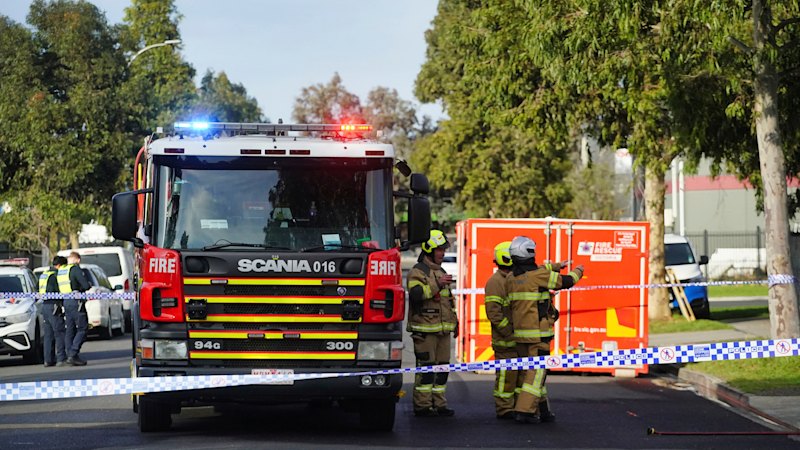
Fire Rescue Victoria Has Missed Emergency Response Targets Every Year Since 2020, With Outer Suburbs Worst Affected
Fire Rescue Victoria (FRV) has failed to meet its target of responding to 90 per cent of structural fires within seven minutes and 42 seconds in every year since its formation in 2020, with outer suburban areas recording the worst performance. The shortfall has come into sharp focus following the death of three-year-old Jordan Dashwood in a Werribee house fire this month, where the nearest FRV truck was committed to another incident and the first responders arrived well outside the benchmark time. The findings raise serious questions about whether the 2020 fire services restructure has been adequately resourced to protect Melbourne's rapidly growing outer suburbs.