Black Women Face Disproportionate Risk in Intimate Partner Femicide Due to Gun-Control Gaps
A cluster of high-profile killings and shootings of Black women by their partners in April 2025 has renewed attention to the disproportionate rate at which Black women are killed by intimate partners in the United States. Black women account for nearly 30% of intimate partner homicide victims despite representing about 13% of the population, and are killed at nearly four times the rate of white women in the same age group. Advocates and researchers argue that gaps in gun laws, uneven enforcement of protective orders, and systemic distrust of law enforcement leave Black women uniquely vulnerable.
The killings of Dr. Cerina Wanzer Fairfax, Vice Mayor Nancy Metayer Bowen, and the shooting of Shaneiqua Pugh — all in April 2025 — have drawn national attention to what researchers describe as a decades-long pattern of intimate partner femicide disproportionately affecting Black women. According to CDC data and a 2024 Lancet study, Black women ages 25–44 are killed by intimate partners at nearly four times the rate of white women, and account for roughly 30% of all intimate partner homicide victims nationally. Firearms are involved in approximately half of the roughly 1,800 annual intimate partner femicide cases in the U.S., and experts point to specific legal loopholes — including inconsistent enforcement of gun-relinquishment orders and gaps in who qualifies for protective orders — as key structural failures. Research shows that strong firearm-relinquishment laws are associated with a 16% reduction in firearm intimate partner homicide for white victims, but the reduction is not statistically significant for Black victims, reflecting an enforcement gap that falls hardest on Black women. Barriers including fear of police, risk of losing child custody, and the possibility of being incarcerated for self-defense discourage many Black women from engaging the legal system. Cultural dynamics within some communities, including stigma around seeking help and a tendency to protect the reputations of perpetrators, further compound the problem. Researchers and advocates are calling for comprehensive federal standards on firearm restrictions in domestic violence cases, stronger enforcement, and targeted outreach to ensure protections reach Black women equitably.
What's missing
Neither source addresses what resources or funding currently exist for domestic violence services specifically targeting Black women, nor do they discuss the long-term outcomes for survivors like Shaneiqua Pugh.
How coverage differed
The Guardian piece frames the issue through a lens of misogynoir, male entitlement, and community complicity, emphasizing cultural and social dynamics including how prominent Black figures publicly mourned the alleged perpetrator Justin Fairfax. The Conversation article, written by an academic researcher, focuses more narrowly on specific gun-law loopholes and enforcement failures, framing the problem primarily as a policy and structural issue with a proposed legislative remedy.
What different sources said
- The ConversationCenter
For Black women in abusive relationships, gun-control loopholes can engender deadly disparities
- The Guardian USLeft
Why are so many Black women dying at the hands of their partners?
Related

CIS Study: Non-Citizen Households Use Welfare at Higher Rates Than U.S.-Born Households in Nearly Every State
A new analysis by the Center for Immigration Studies found that 47% of non-citizen-headed households used at least one means-tested welfare program, compared to 28% of U.S.-born-headed households. The study drew on five years of Census Bureau data and found the gap persisted across nearly every state, with the largest disparities in New York, Massachusetts, and California. The findings reignite a long-running debate over immigration and public benefit usage, though the methodology has been contested by other researchers.

Pilot Killed in Small Plane Crash Near Twin Oaks Airpark in Washington County, Oregon
A small two-seater experimental plane crashed into a grassy field near Twin Oaks Airpark in Hillsboro, Oregon on Friday afternoon, killing its sole occupant. The crash occurred during takeoff and sparked a grass fire that spread to a nearby field before firefighters contained it. The NTSB and FAA are investigating the cause, and flights at the airpark were canceled for the remainder of the day.
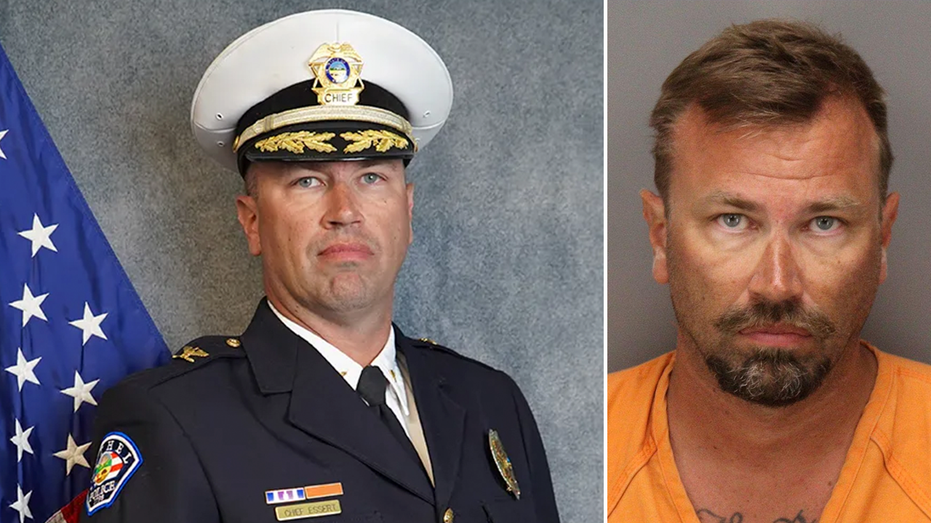
Ohio Police Chief Arrested in Florida on 70-Count Child Sex Indictment
Bethel Police Chief Chad Essert, 44, was arrested Tuesday night in Seminole, Florida, following a Clermont County grand jury indictment on 56 counts of sexual battery and 14 counts of unlawful sexual conduct with a minor. The alleged offenses occurred between 2005 and 2010, when Essert was an instructor with the Young Marines program and a teacher at Scarlet Oaks Career Campus in Sharonville, Ohio. If convicted on all counts, Essert faces a maximum of 280 years in prison, and authorities are urging any additional potential victims to come forward.