Automakers Enter Energy Storage Market as Battery Demand Surges

Major automakers including Tesla, Ford, and GM are expanding into the stationary energy storage market, which has seen battery installations double in the past two years. The shift is driven by surging demand from data centers serving AI, electrification across industries, and higher profit margins in energy storage compared to EV sales. This diversification reflects both the stagnation in U.S. EV sales and the massive growth potential in grid-scale and residential battery markets.
Automakers are increasingly pivoting toward energy storage as a core business, with Tesla already dominating the market by capturing 82% of the 57 gigawatt-hours installed last year. GM announced a new sodium-ion battery chemistry aimed at the stationary storage market, while Ford and other manufacturers are also entering the space. The energy storage market is being driven by three converging trends: explosive growth in data center construction for AI applications (expected to nearly triple by decade's end), broad electrification of transportation and manufacturing, and significantly higher profit margins—Tesla's energy segment achieves roughly 30% gross margins compared to 11% for traditional automaking. Despite the market's potential, GM is taking a measured approach, with its sodium-ion products not arriving until later this decade, partly to preserve lithium-ion manufacturing capacity in case EV demand rebounds. Startups are also capitalizing on the opportunity, with companies like Base Power and Lunar Energy raising hundreds of millions in recent funding rounds.
What different sources said
- TechCrunchCenter
Why everyone’s an energy company now
Related
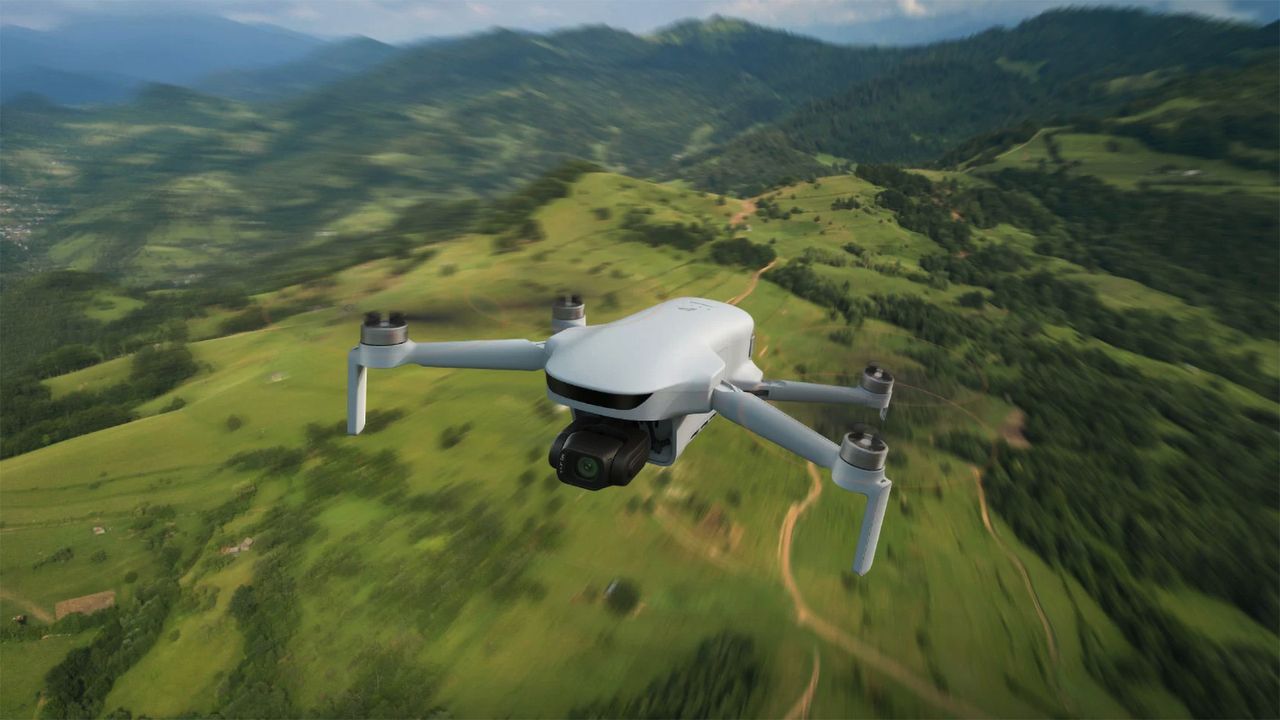
Potensic Atom 3 Drone Offers DJI Alternative for Global Markets, But Faces US Import Ban
Potensic has released the Atom 3, an upgraded beginner drone featuring a larger sensor, 4K 60fps video, improved battery life, and AI tracking capabilities at competitive pricing ($429.99-$549.99). The drone competes directly with DJI's Lito X1 but faces the same regulatory barriers as DJI in the US market due to a ban on foreign-made drones. The availability restrictions highlight ongoing US trade restrictions on Chinese drone manufacturers and limit consumer choice in the American market.

Wing and Walmart Expand Drone Delivery to Seven Additional U.S. Cities
Alphabet-owned Wing and Walmart are expanding their drone delivery partnership to seven new U.S. cities including Memphis, New Orleans, Philadelphia, Phoenix, San Diego, the San Francisco Bay Area, and Salt Lake City. The expansion is part of a plan to reach over 270 Walmart locations by next year, building on successful deployments in Atlanta, Dallas-Fort Worth, and Houston. The move signals that drone delivery is transitioning from a novelty service to a mainstream logistics option, with Wing having completed over 1 million commercial deliveries.
Anthropic CEO Calls for FAA-Style Regulation of Powerful AI Models
Anthropic CEO Dario Amodei published an essay calling for government regulation of powerful AI models, comparing the approach to FAA oversight of commercial aviation. The proposal includes mandatory third-party testing for frontier models and potential government authority to block or delay their deployment if they pose safety risks. The call comes as Anthropic released Claude Fable 5 and an updated Claude Mythos 5 model with advanced cybersecurity capabilities.