Apple Prepares Developer Ecosystem for Foldable iPhone Launch
Hidden strings in Apple's iOS 27 developer beta, including 'foldState,' 'angleDegrees,' and an API querying the number of built-in displays, provide strong technical evidence that Apple is preparing a foldable iPhone. The references were confirmed absent in iOS 26, and Apple's WWDC developer session also introduced resizable app layouts and a simulator supporting dynamic aspect ratios — infrastructure that would be essential for a foldable form factor. The findings suggest Apple's first foldable, reportedly called the iPhone Ultra or iPhone Fold, could launch alongside the iPhone 18 Pro this fall at a starting price around $2,000.
Developers examining the iOS 27 beta released at WWDC 2026 discovered framework strings — 'foldState,' 'angleDegrees,' 'mechanicalAngleDegrees,' and 'MGGetLogicalDeviceDisplayCount' — that were not present in iOS 26 and point directly to foldable device support. The display-count API is particularly telling: every iPhone Apple has ever shipped has exactly one built-in display, making an API designed to query whether that number could be higher a clear signal of a multi-screen device. Apple's Platform State of the Union reinforced the picture by announcing that iOS apps will now support resizing in iPhone Mirroring on Mac, including horizontal stretching to landscape aspect ratios no current iPhone produces natively, and by introducing a Resizable iOS Simulator for testing across 'a dynamic range of sizes and aspect ratios.' An Xcode simulator screenshot circulating among developers shows an iPhone 17 Pro running a multi-column layout at 1100×825 resolution, consistent with a foldable inner display. Leaked hardware specifications describe a book-style foldable with a 7.7–7.8-inch inner display and a 5.3–5.5-inch cover screen, unfolding to a 4:3 ratio, with mass production at Foxconn reportedly targeting July. If the device launches in September as anticipated, it would run iOS 27, aligning with the software groundwork laid at WWDC.
What's missing
No source clarifies whether the 'iPhone Ultra' name is confirmed or still speculative. The $2,000 starting price figure and the Foxconn July production ramp are attributed to prior reporting but no primary source is cited.
How coverage differed
Engadget and TechCrunch treated the story as a straightforward hardware leak, focusing on the specific API strings as confirmation. Hacker News offered a more analytical framing, contextualizing Apple's developer-ecosystem strategy — including the symbolic choice of an origami app as the WWDC demo — as a deliberate, coordinated preparation of the developer community ahead of a hardware announcement, and added reported details about leadership context such as John Ternus assuming the CEO role.
What different sources said
- Hacker NewsCenter
WWDC 2026: Apple is Folding
- TechCrunchCenter
Apple’s foldable iPhone could be just around the corner
- EngadgetCenter
The iOS 27 beta pretty much confirms that an Apple foldable is happening
Related
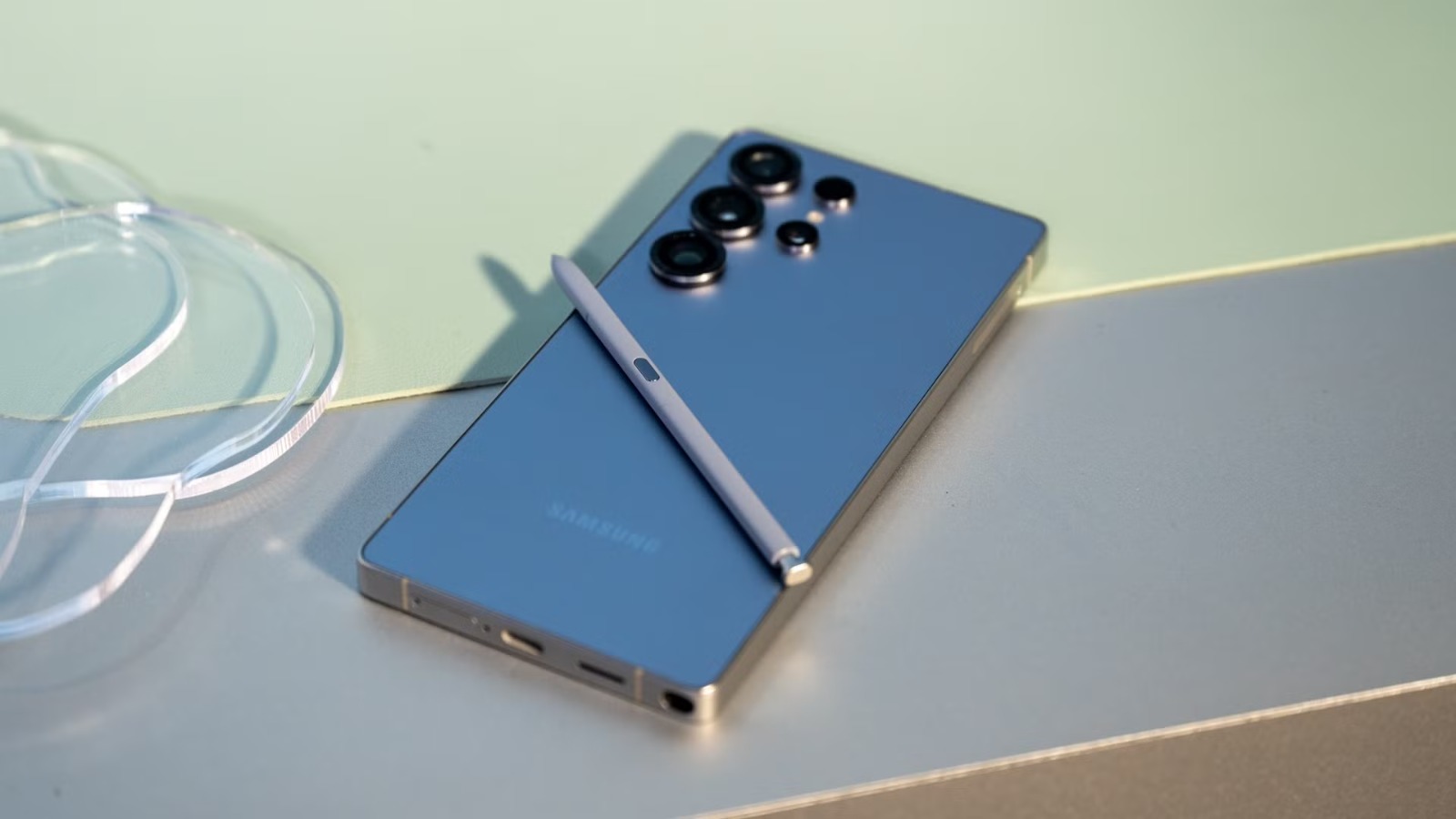
Samsung Galaxy S25 and S25 FE See Significant Price Cuts
Samsung's Galaxy S25 and Galaxy S25 FE smartphones are currently available at notably reduced prices, with the S25 FE dropping $201 (33%) to $449 on Woot for a limited time. The price reductions come amid a competitive smartphone market and ahead of anticipated future Samsung releases. The discounts make previously premium-priced devices more accessible to budget-conscious consumers.

Anthropic Disables Fable 5 and Mythos 5 AI Models Globally After US Government Export Control Order
Anthropic has suspended all public access to its two most advanced AI models, Fable 5 and Mythos 5, after the US Commerce Department issued an export control directive ordering the company to block foreign nationals from accessing them on national security grounds. The order came just three days after Fable 5's public launch and reportedly stems from government concerns about a potential jailbreak that could enable the models to assist with cyberattacks, though Anthropic says it received only verbal evidence of a narrow, non-universal vulnerability. The shutdown affects all customers globally — including enterprise users and Anthropic employees — and marks a significant escalation of US efforts to restrict foreign access to advanced AI models themselves, rather than just the chips that power them.

Xbox Free Play Days Offers Three Games Free to Play June 11–14
Microsoft's Xbox Free Play Days program is offering Hell Let Loose, State of Decay 2: Juggernaut Edition, and Blasphemous 2 at no cost from June 11 to June 14. Hell Let Loose requires an Xbox Game Pass Ultimate, Premium, or Essential membership, while State of Decay 2 and Blasphemous 2 (via a five-hour timed trial) are accessible to all Xbox console owners. Players who wish to keep any of the games can purchase them at a limited-time discount and retain any achievements earned during the free period.