Ancient Cyanobacteria Reveal Early Evolutionary Steps of Photosynthesis
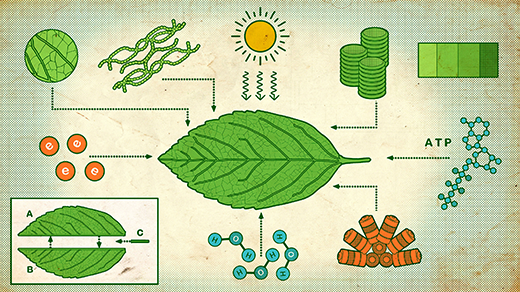
Scientists studying Gloeobacteria, an ancient lineage of cyanobacteria that diverged over 2 billion years ago, are uncovering how photosynthesis evolved by examining organisms that have changed little since early life. The discovery of a newly identified species, Anthocerotibacter panamensis, uses different light-harvesting proteins than modern cyanobacteria but retains similar underlying structures. Understanding photosynthesis's origins matters because this process fundamentally transformed Earth's atmosphere and enabled the oxygen-dependent life we know today.
Researchers are using ancient cyanobacteria as a genetic time capsule to understand how photosynthesis first evolved billions of years ago. Gloeobacteria, a group that branched off from other cyanobacteria over 2 billion years ago, have remained relatively unchanged over vast evolutionary timescales, offering insights into early photosynthetic mechanisms. The recently identified species Anthocerotibacter panamensis harvests light using a different set of proteins than modern cyanobacteria, yet its underlying protein complexes show only slight variations from other Gloeobacteria. This discovery helps fill a major gap in scientific understanding: while researchers now comprehend photosynthesis in molecular detail through advanced microscopy, the origins of this process in the earliest cyanobacteria remain poorly understood. According to biochemist Robert Blankenship, all photosynthetic protein complexes likely descended from a single common origin, but the nature of that first organism is still unclear. These findings add new dimensions to understanding how life harnessed solar energy to transform Earth's atmosphere with oxygen.
What different sources said
- Quanta MagazineCenter
An Early Step on the Long, Strange Road to Photosynthesis
Related
Study reveals IDH1 enzyme's role in cardiac metabolic adaptation during cancer-related stress
Researchers discovered that isocitrate dehydrogenase 1 (IDH1) helps the heart adapt to metabolic stress caused by cancer-related mutations through a previously unknown reductive metabolic pathway. The study used stable isotope tracing and genetic knockout models in rat and mouse heart tissue to show that when mitochondrial metabolism is impaired, IDH1 redirects carbon flux toward glutamine-derived citrate formation. This finding expands understanding of how cardiac metabolism responds to oncometabolic stress and may have implications for managing cardiovascular complications in cancer patients.
AI Framework Reveals How β-Arrestin 1 Protein Changes Shape During Activation
Researchers used a transformer-based artificial intelligence model to analyze how the β-arrestin 1 protein's tail region reorganizes when activated by cell surface receptors. The study examined molecular dynamics simulations comparing the protein in resting and active states, uncovering previously unknown conformational changes. This work could improve understanding of how cells regulate signaling pathways involved in numerous physiological and disease processes.
Study Links Pancreatic Cancer Tissue Stiffness to Tumor Progression and Patient Survival
Researchers combined imaging scans and laboratory tissue analysis to show that pancreatic cancer tumors with greater stiffness—driven by dense collagen buildup—correlate with worse patient survival outcomes. The study of nine patients found that magnetic resonance elastography, a non-invasive imaging technique, can detect mechanical properties that reflect underlying tumor biology. These findings suggest that measuring tissue stiffness through imaging could help doctors better characterize pancreatic cancer and guide treatment decisions.