AI Accelerates Vulnerability Exploitation, Shrinking Defense Window from Days to Hours

Artificial intelligence is enabling attackers to reverse-engineer security patches and develop exploits within 24 hours, down from four days five months ago, making it nearly impossible for most organizations to patch in time. The traditional security model of prevention has repeatedly failed even at well-funded companies with advanced tools like EDR solutions, as attackers have multiple methods to evade detection. Security leaders must shift from prevention-focused strategies to building organizational resilience that assumes breaches will occur and focuses on maintaining critical services during attacks.
Microsoft's "Patch Tuesday, exploit Wednesday" scenario has become reality as adversaries use AI-powered tools to analyze security patches, identify underlying vulnerabilities, and develop working exploits within a single day. This dramatically compressed timeline creates an impossible situation for most organizations, as CISA guidelines allow even critical US entities 30 days to patch internet-facing vulnerabilities. The article argues that traditional protective measures—endpoint detection and response (EDR), threat intelligence, and faster patching—have structurally failed because attackers have at least eight known methods to evade EDR tools, and threat intelligence inherently lags behind actual adversary behavior. AI is also accelerating phishing and business email compromise attacks by analyzing email patterns and generating convincing impersonations at scale. Rather than pursuing the unrealistic goal of preventing all attacks, the article advocates for a resilience-based approach where organizations map critical services, maintain backups, and practice recovery scenarios.
What's missing
The article does not provide specific examples of the 'eight known methods for evading EDR tools' beyond the kernel module technique mentioned, nor does it cite peer-reviewed research or official vulnerability statistics to quantify the claimed acceleration from four days to one day. The claim about AI-powered patch analysis lacks attribution to specific tools or published research demonstrating this capability.
What different sources said
- TechRadarCenter
The vulnerability crisis: How AI is shrinking the window for defense
Related
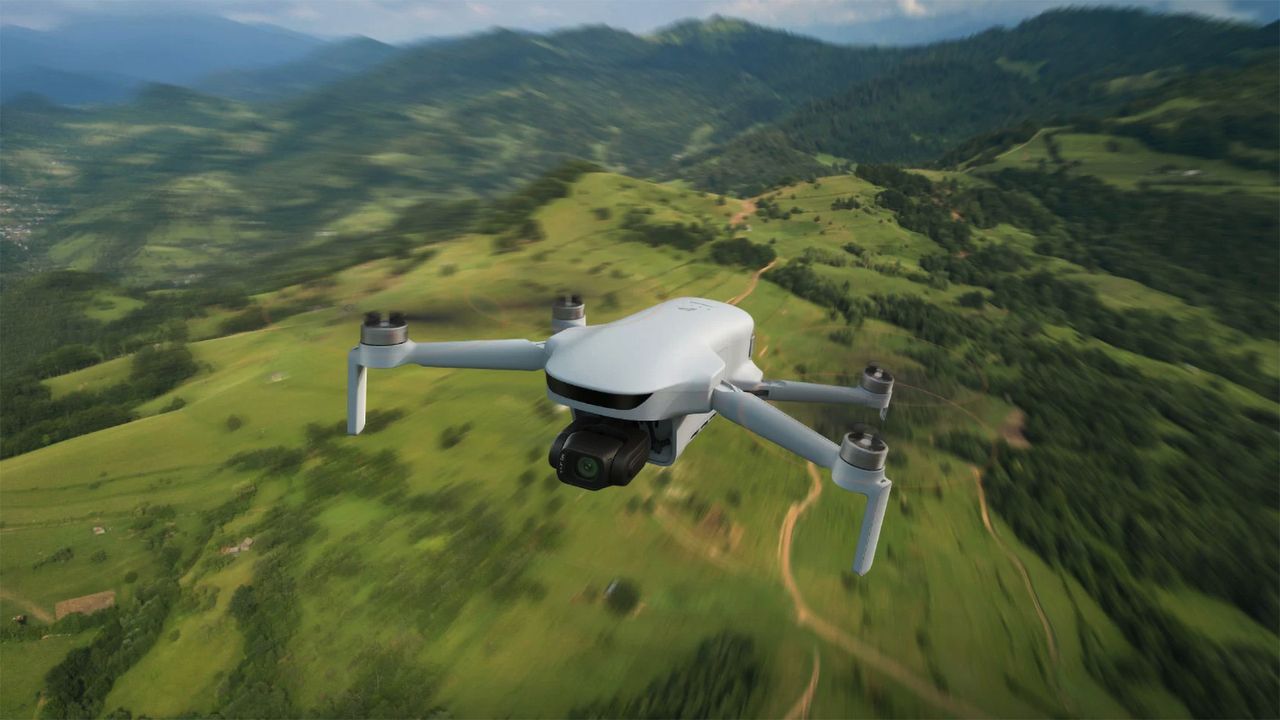
Potensic Atom 3 Drone Offers DJI Alternative for Global Markets, But Faces US Import Ban
Potensic has released the Atom 3, an upgraded beginner drone featuring a larger sensor, 4K 60fps video, improved battery life, and AI tracking capabilities at competitive pricing ($429.99-$549.99). The drone competes directly with DJI's Lito X1 but faces the same regulatory barriers as DJI in the US market due to a ban on foreign-made drones. The availability restrictions highlight ongoing US trade restrictions on Chinese drone manufacturers and limit consumer choice in the American market.

Wing and Walmart Expand Drone Delivery to Seven Additional U.S. Cities
Alphabet-owned Wing and Walmart are expanding their drone delivery partnership to seven new U.S. cities including Memphis, New Orleans, Philadelphia, Phoenix, San Diego, the San Francisco Bay Area, and Salt Lake City. The expansion is part of a plan to reach over 270 Walmart locations by next year, building on successful deployments in Atlanta, Dallas-Fort Worth, and Houston. The move signals that drone delivery is transitioning from a novelty service to a mainstream logistics option, with Wing having completed over 1 million commercial deliveries.

Anthropic CEO Calls for FAA-Style Regulation of Powerful AI Models
Anthropic CEO Dario Amodei published an essay calling for government regulation of powerful AI models, comparing the approach to FAA oversight of commercial aviation. The proposal includes mandatory third-party testing for frontier models and potential government authority to block or delay their deployment if they pose safety risks. The call comes as Anthropic released Claude Fable 5 and an updated Claude Mythos 5 model with advanced cybersecurity capabilities.