Actor and Author Tasma Walton Reflects on Death, Indigenous Identity, and Her Novel About Ancestral Slavery

In an interview with Benjamin Law, Australian actor and author Tasma Walton discussed her near-death experiences, her belief in reincarnation, and her motivations for writing her award-winning novel about her enslaved ancestor. Walton, known for roles in Blue Heelers and Mystery Road, won the ARA Historical Novel Prize in 2025 for I Am Nannertgarrook. The conversation explores how her Boonwurrung heritage and personal brush with mortality shaped her commitment to truth-telling about Indigenous history.
Tasma Walton, a 52-year-old Australian actor and author, participated in Benjamin Law's weekly interview series where public figures discuss taboo subjects determined by a die roll. In this installment, Walton discussed her discovery of her Boonwurrung heritage later in life and how growing up in a housing commission suburb in Geraldton exposed her to the ways colonial systems disadvantage marginalized groups. She detailed her motivations for writing I Am Nannertgarrook, which tells the true story of her ancestor who was enslaved, emphasizing her commitment to historical accuracy and helping readers understand the experiences of Indigenous women caught in slavery. Walton also recounted two near-death experiences—one during year 12 when asthma complications made her consider mortality, and another in her early 20s when pneumonia and severe asthma required intensive care. She described a spiritual moment during the latter crisis when she felt her deceased grandfather's presence, which reinforced her belief that human existence extends beyond the physical body and that reincarnation occurs after death.
What different sources said
- Sydney Morning HeraldCenter
The three words Tasma Walton would love to hear on her deathbed
Related

Documentary 'Hollywood Does Abortion' Claims Entertainment Industry Stigmatized Abortion Through Misleading Portrayals
A new documentary premiered at the Tribeca Film Festival arguing that Hollywood films and television shows have historically depicted abortion in a stigmatized and inaccurate manner, from the 1970s to recent years. The filmmakers contend that portrayals often featured false medical complications, miscarriages that prevented characters from making abortion decisions, or exaggerated post-abortion regret. The documentary's claims have drawn responses from both abortion-rights and pro-life advocates, with disagreement over the accuracy of abortion's depiction in media and its real-world consequences.

Richmond's 2009 Exhaustive Coaching Search: A Model for AFL Recruitment
An opinion piece examines Richmond's comprehensive two-stage coaching search process in 2009 that ultimately selected Damien Hardwick, who led the club to three premierships in four years. The process involved eight initial candidates and a rigorous evaluation of coaching philosophies, tactical knowledge, and team-building approaches. The article argues the process succeeded not only in selecting the right coach but in identifying a strong pool of candidates who collectively became successful AFL coaches.
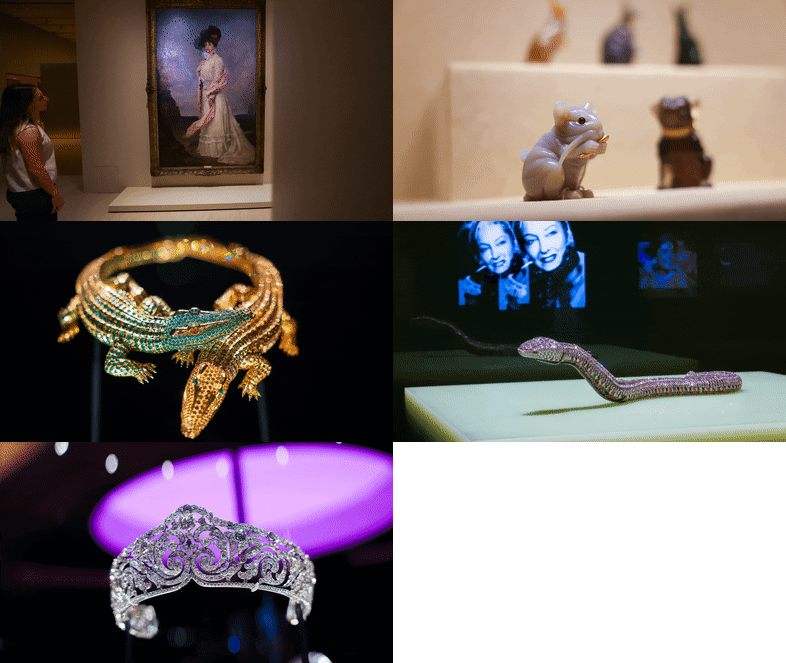
NGV's Cartier Exhibition Showcases Luxury Craftsmanship Amid Questions About Brand-Focused Museum Programming
The National Gallery of Victoria has opened a major Cartier jewelry exhibition featuring hundreds of pieces spanning over a century, originated from London's Victoria & Albert Museum. The show displays exceptional craftsmanship and historical context tracing the brand's evolution from a family business founded in 1847 through its association with royalty, industrialists, and celebrities. The exhibition raises ongoing questions about whether major cultural institutions should dedicate significant space to luxury brand showcases rather than art-focused programming.